⚠️ We are closely monitoring the recent Ebola outbreak in the Democratic Republic of the Congo. We extend our deepest sympathies to the Congolese people during this challenging time, and our thoughts and steadfast support remain with the affected communities.
Critical Care & Anaesthesia
MHF Patient Guide

Critical Care & Anaesthesia

Critical care, or intensive care, involves the specialized monitoring and treatment of patients with severe, life-threatening illnesses or injuries. Anaesthesia focuses on pain relief and the safe management of patients before, during, and after surgical procedures. For international patients traveling to India, these interconnected specialties provide comprehensive support through state-of-the-art life support systems, continuous monitoring, and highly trained multidisciplinary teams dedicated to stabilizing complex medical conditions.

136
specialist profiles
10+
hospitals to explore
EN / FR
bilingual coordination
24–48h
initial response target

Understand the specialty

Clinical Overview and Direction

Critical care, or intensive care, involves the specialized monitoring and treatment of patients with severe, life-threatening illnesses or injuries. Anaesthesia focuses on pain relief and the safe management of patients before, during, and after surgical procedures. For international patients traveling to India, these interconnected specialties provide comprehensive support through state-of-the-art life support systems, continuous monitoring, and highly trained multidisciplinary teams dedicated to stabilizing complex medical conditions.

Conditions Commonly Evaluated

  • Severe respiratory failure
  • Septic shock and severe infections
  • Acute heart failure or severe cardiac arrhythmias
  • Traumatic brain injury and polytrauma
  • Acute kidney injury requiring dialysis
  • Post-operative complications
  • Severe burns
  • Neurological emergencies like status epilepticus

When to Seek Urgent Local Care

Do not delay urgent care while arranging international travel.

  • Sudden, severe difficulty breathing
  • Loss of consciousness or profound confusion
  • Uncontrollable bleeding or severe trauma
  • Signs of severe infection, such as high fever with rapidly dropping blood pressure

Diagnostics and Useful Records

Complete records help the clinical team prepare a more useful opinion before travel.

Continuous hemodynamic monitoring
Arterial blood gas (ABG) analysis
Advanced neuro-monitoring (e.g., ICP monitoring)
Echocardiography and continuous ECG
Comprehensive metabolic panels
Point-of-care ultrasound (POCUS)
Coagulation profiles
Advanced radiological imaging (CT, MRI)

Treatment Approaches to Discuss

Treatment depends on the confirmed diagnosis, overall health, investigations, goals and specialist-team assessment.

Mechanical ventilation and airway management
Vasoactive medication administration
Continuous renal replacement therapy (CRRT)
Extracorporeal membrane oxygenation (ECMO)
General and regional anaesthesia
Post-operative pain management
Intravenous fluid resuscitation
Targeted temperature management

Selecting the Right Specialist

Choosing the right critical care team and anaesthesiologist involves looking for facilities with internationally accredited ICUs and high nurse-to-patient ratios. Look for hospitals that have multidisciplinary teams, including intensivists, specialized nurses, respiratory therapists, and clinical pharmacists. It is also important to inquire about the hospital's infection control rates and their experience in managing complex cases similar to yours, ensuring a safe and supportive environment for recovery.

Preparing for Evaluation

Before traveling for complex surgeries requiring intensive care, patients and their families should compile a complete medical history, including all current medications, allergies, and previous surgical records. It is vital to coordinate with the receiving hospital in India to understand the specific anaesthesia protocols and ICU admission criteria. Ensure all travel arrangements accommodate the patient's physical limitations, and discuss the expected length of stay with the clinical team, as recovery from critical illness often requires an extended period before flying back home is safe.

Recovery and Continuity of Care

Recovery from critical care is a gradual process that begins in the ICU and continues on a step-down ward before discharge. Patients may experience physical weakness, fatigue, and emotional stress, known as post-intensive care syndrome (PICS). Rehabilitation involving physical therapy, nutritional support, and respiratory exercises is a key component of the healing journey. The medical team will provide detailed guidelines for post-discharge care, follow-up appointments, and specific milestones that must be met before the patient is cleared for international travel.

Discharge summary
Medication plan
Remote follow-up

Questions to Ask the Clinical Team

1What type of anaesthesia will be used for my procedure?
2What are the potential risks and side effects of the anaesthesia?
3How long do you anticipate I will need to stay in the ICU?
4What measures are in place to manage my pain after surgery?
5Who will be the primary doctor coordinating my care in the ICU?
6What is the hospital's protocol for communicating with my family during my ICU stay?
7Are there specific rehabilitation services available while I am in critical care?

Explore Profiles

Related Specialists

View all 136 profiles
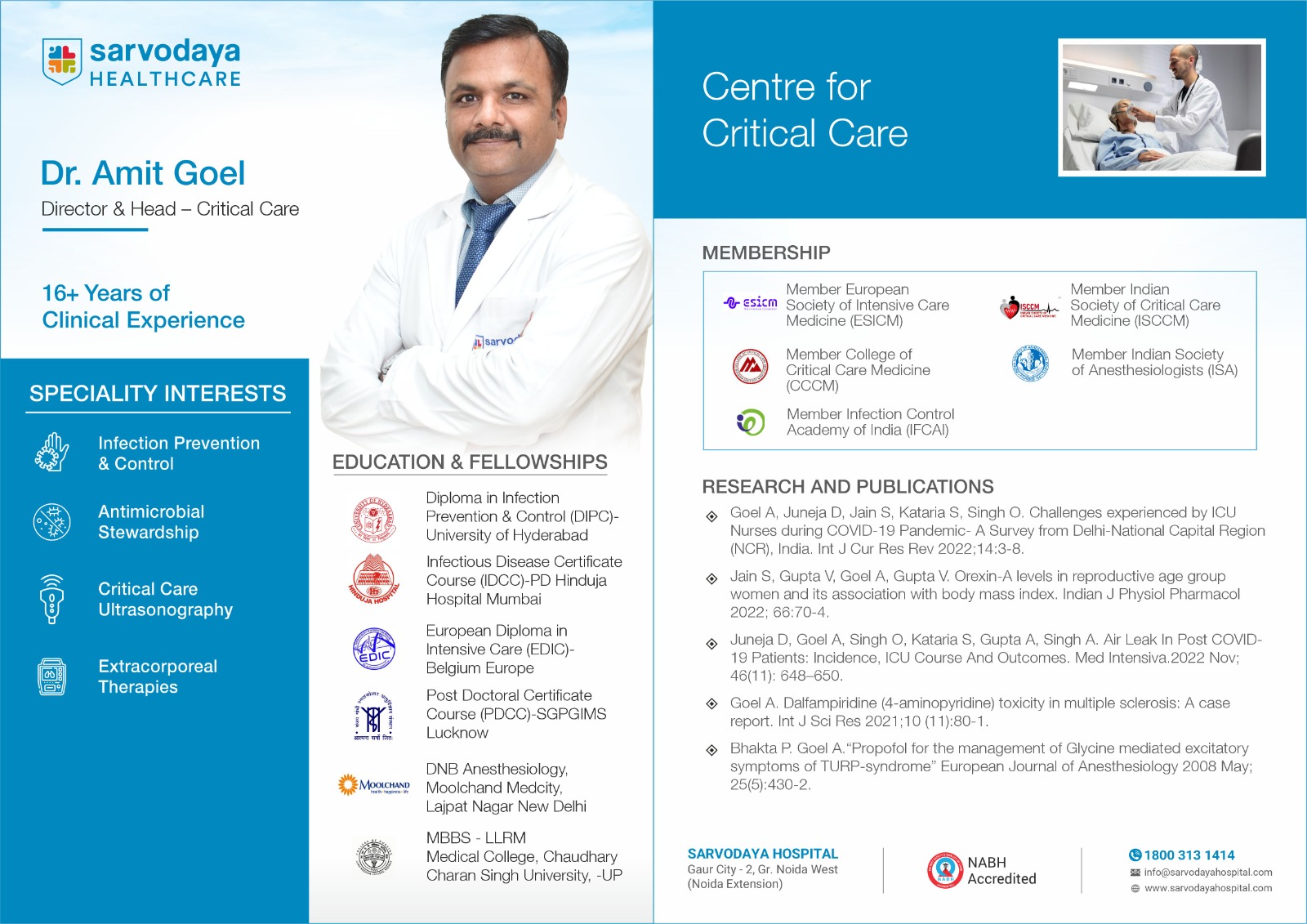
Dr. Amit Goel

Dr. Amit Goel

Director & Head - Critical Care

Sarvodaya Hospital

View profile
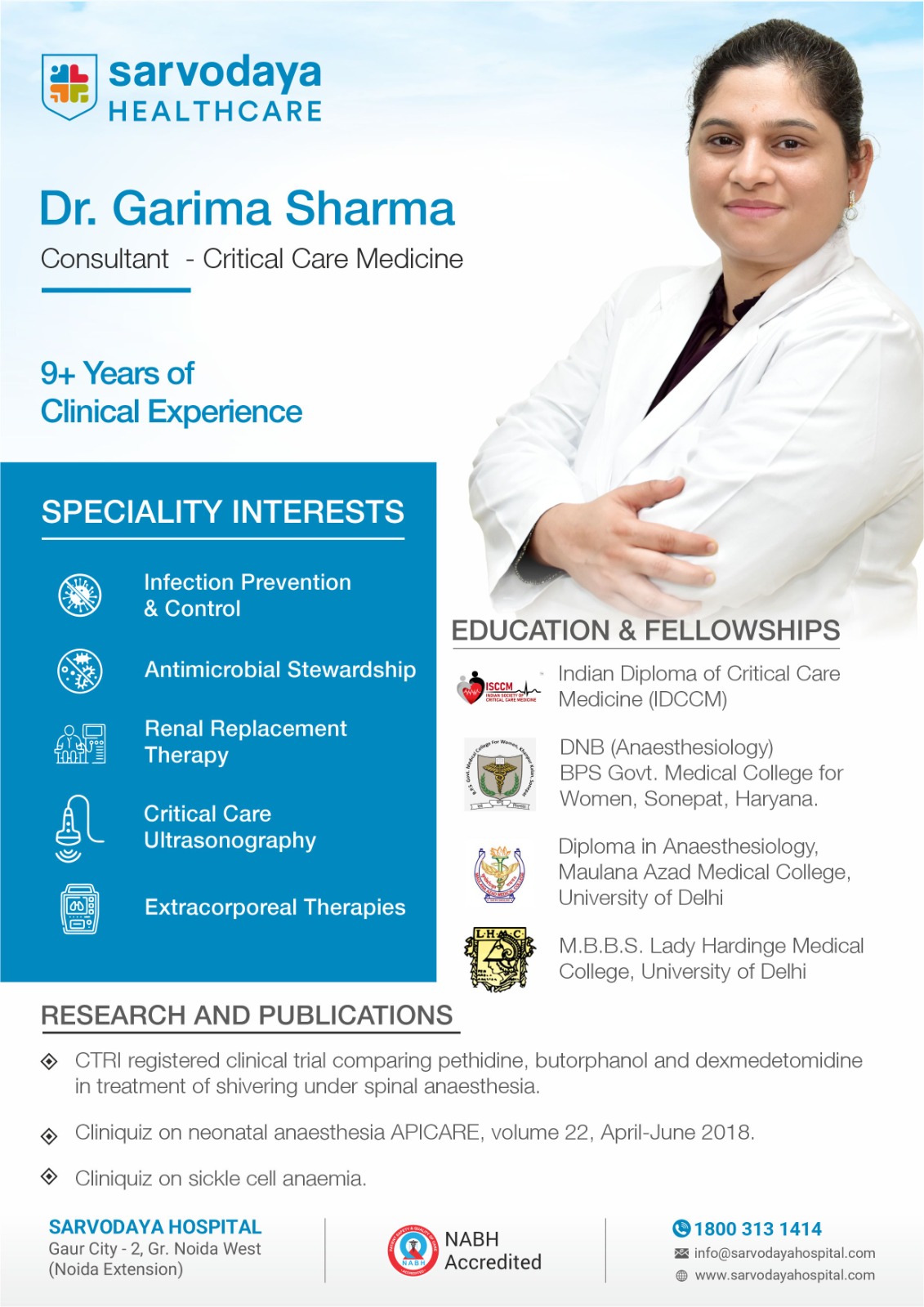
Dr. Garima Sharma

Dr. Garima Sharma

Consultant - Critical Care Medicine

Sarvodaya Hospital

View profile
Dr. Abhishek Kumar Roy

Dr. Abhishek Kumar Roy

Associate Consultant, Critical Care

Medanta - The Medicity

View profile
Dr. Ajmer Singh

Dr. Ajmer Singh

Senior Director, Critical Care

Medanta - The Medicity

View profile
Dr. Annu Sarin Jolly

Dr. Annu Sarin Jolly

Senior Director, Critical Care

Medanta - The Medicity

View profile
Dr. Atlanta Talukdar

Dr. Atlanta Talukdar

Associate Consultant, Critical Care

Medanta - The Medicity

View profile

Compare Facilities

Hospitals Offering This Specialty

FAQ

Frequently Asked Questions

What is the difference between an anesthesiologist and an intensivist?

An anesthesiologist specializes in administering pain relief and managing vital signs during surgery. An intensivist is a physician who specializes in the comprehensive care of critically ill patients in the ICU. Many intensivists have a background in anesthesiology.

Will I be awake during my surgery?

This depends on the type of anaesthesia. General anaesthesia makes you completely unconscious, while regional or local anaesthesia numbs only a specific part of the body, allowing you to remain awake or lightly sedated.

Can family members visit patients in the ICU?

Yes, but visiting hours in the ICU are often restricted to ensure patients get adequate rest and to maintain a sterile environment. Specific policies vary by hospital.

What is mechanical ventilation?

Mechanical ventilation is a life support treatment that uses a machine (ventilator) to help a patient breathe when they cannot breathe adequately on their own due to severe illness or during surgery.

How is pain managed in the ICU?

Pain is managed using a variety of medications, including intravenous analgesics and nerve blocks, tailored to the patient's condition. Continuous monitoring ensures that pain relief is both effective and safe.

When is it safe to travel back home after an ICU stay?

Traveling after an ICU stay requires medical clearance. It depends on the underlying condition, the stability of vital signs, and the ability to tolerate the physical stress of travel. Your medical team will advise when it is safe.

Editorial Transparency

Educational Information, Not a Diagnosis

This guide summarizes general information from established medical sources. It does not replace consultation, diagnosis or an individualized treatment plan. Options, costs, timelines and possible outcomes depend on clinical assessment.

Reviewed: 2026-08-27

Ready to Organize a Specialist Review?

Send the available reports. MHF helps identify suitable teams and compare responses before any decision.

Chat on WhatsApp